Why ATS and Interviews Are Not Enough for Safe Hiring
The False Sense of Security in Modern Hiring
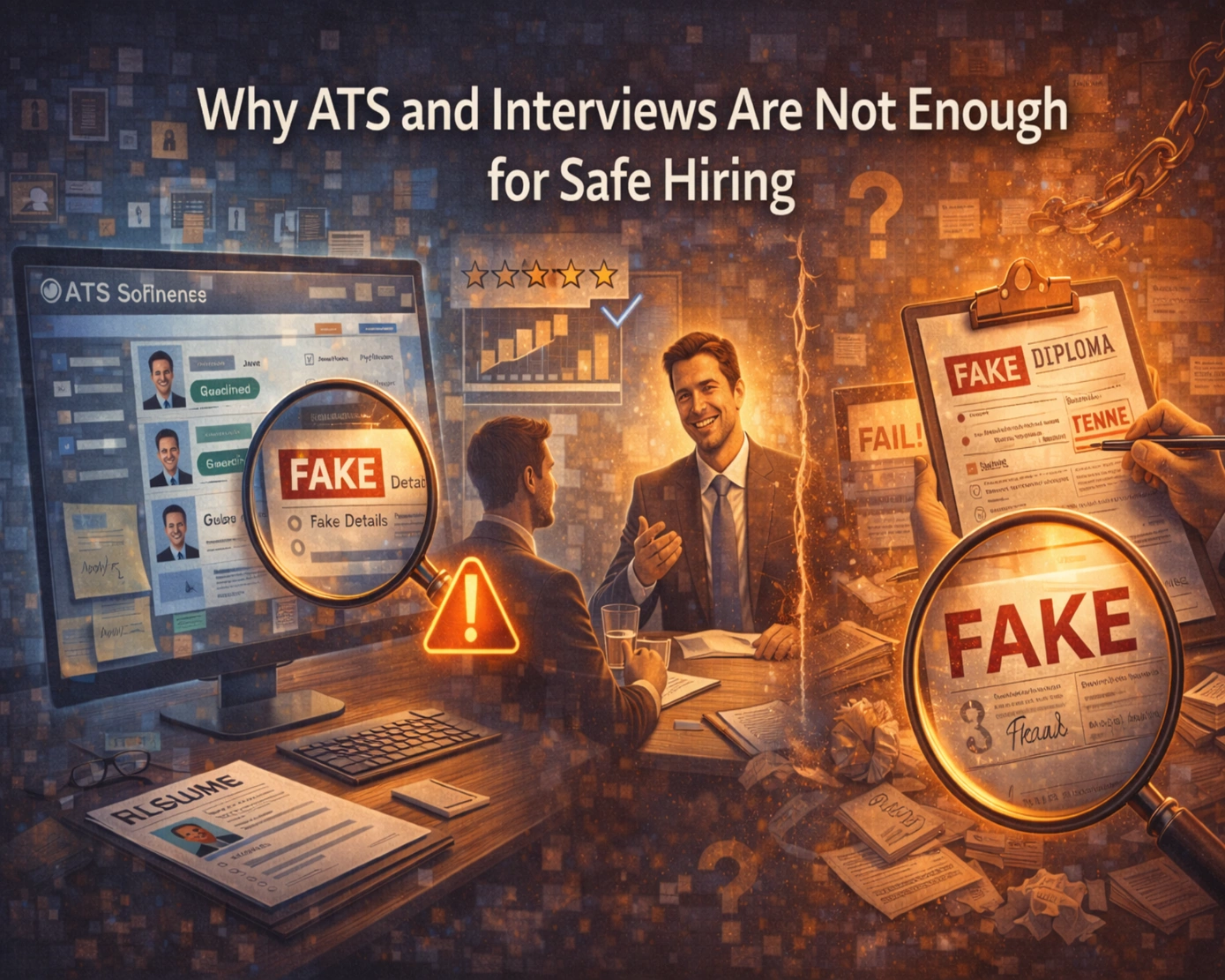
Many organizations believe they have “strong hiring controls” because they use a modern ATS and conduct structured interviews. While both are important, they primarily manage process efficiency, not hiring risk.
This creates a false sense of security. Systems track candidates. Interviews assess communication and perceived competence. Neither independently confirms whether what is presented is accurate, complete, or truthful.
Safe hiring requires more than smooth workflows.
What an ATS Is Designed to Do — and What It Isn’t
Applicant Tracking Systems are built to manage volume, workflows, and compliance documentation. They help HR teams track applicants, coordinate interviews, and maintain records.
What ATS platforms do not do is validate the truth behind candidate claims. They store information — they do not verify it. When organizations rely on ATS data as proof, they confuse record-keeping with risk control.
Interviews Test Performance in a Controlled Environment
Interviews reveal how candidates communicate, think, and present themselves under structured conditions. Skilled candidates prepare extensively and perform well, especially in remote or panel-based interviews.
However, interviews rarely expose:
-
Inflated job responsibilities
-
Hidden employment overlaps
-
Fake credentials
-
Behavioral risks
-
Integrity issues
Interviews test potential — not accountability.
Why These Gaps Matter More Today
Hiring environments have changed. Remote work, fast scaling, and competitive markets have increased both candidate optimization and hiring pressure.
Candidates are better prepared than ever. Fraud is more sophisticated. Yet many organizations still rely on tools and techniques designed for a slower, more localized hiring world.
This mismatch increases exposure.
The Risk of Discovering Issues After Hiring
When ATS and interviews are the only filters, issues often surface after onboarding — during performance reviews, audits, client interactions, or compliance checks.
By then, the organization has already granted access, trust, and responsibility. Fixing the mistake becomes costly and disruptive.
Safe hiring aims to catch risk before commitment, not after damage.
Where Background Verification Complements Hiring Systems
Background verification adds an independent layer of validation. It confirms identity, employment history, education credentials, and other risk indicators that ATS and interviews cannot assess.
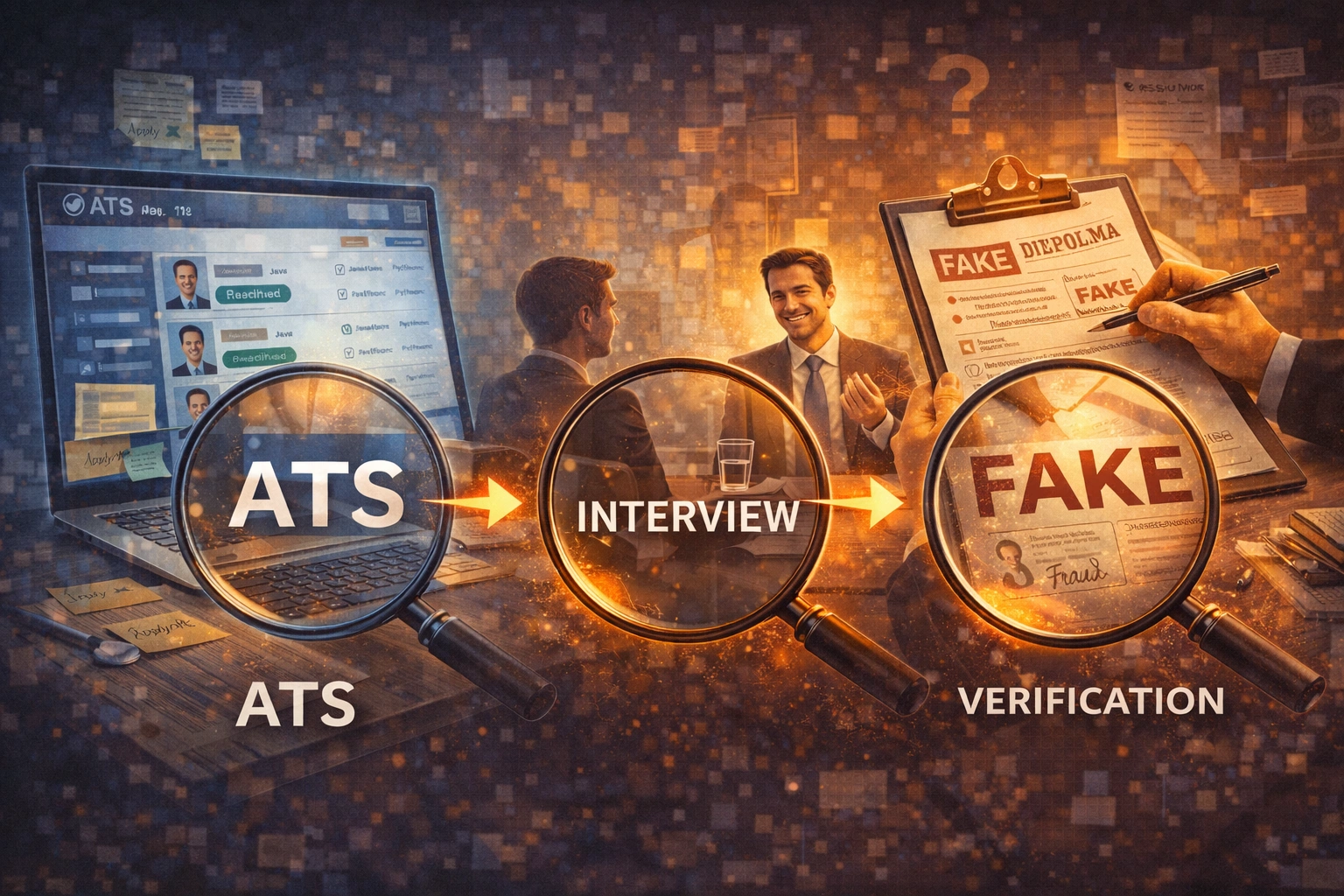
This is not duplication — it is coverage. Each layer serves a different purpose:
-
ATS manages process
-
Interviews assess fit
-
Verification confirms truth
Together, they create a balanced hiring framework.
Why Leadership Should Care About Hiring Controls
For CXOs and founders, hiring risk is business risk. Data breaches, compliance failures, client dissatisfaction, and cultural erosion often trace back to poor hiring decisions.
Strong hiring controls protect leadership from preventable incidents and reduce downstream firefighting.
Safe Hiring Is a Governance Choice
Organizations that prioritize safe hiring do not slow down — they plan better. They integrate verification into hiring timelines, define role-based risk, and align HR with leadership expectations.
Safe hiring is not about distrust. It is about responsibility.
Final Thought
ATS platforms and interviews are essential — but they are not sufficient.
Organizations that rely on them alone mistake efficiency for safety. True hiring confidence comes from combining structured processes with independent verification.
Safe hiring begins where assumptions end
Leave a comments