BGV Reports Explained: How HR and Founders Should Read Them in 2026
Why BGV Reports Are Often Misunderstood
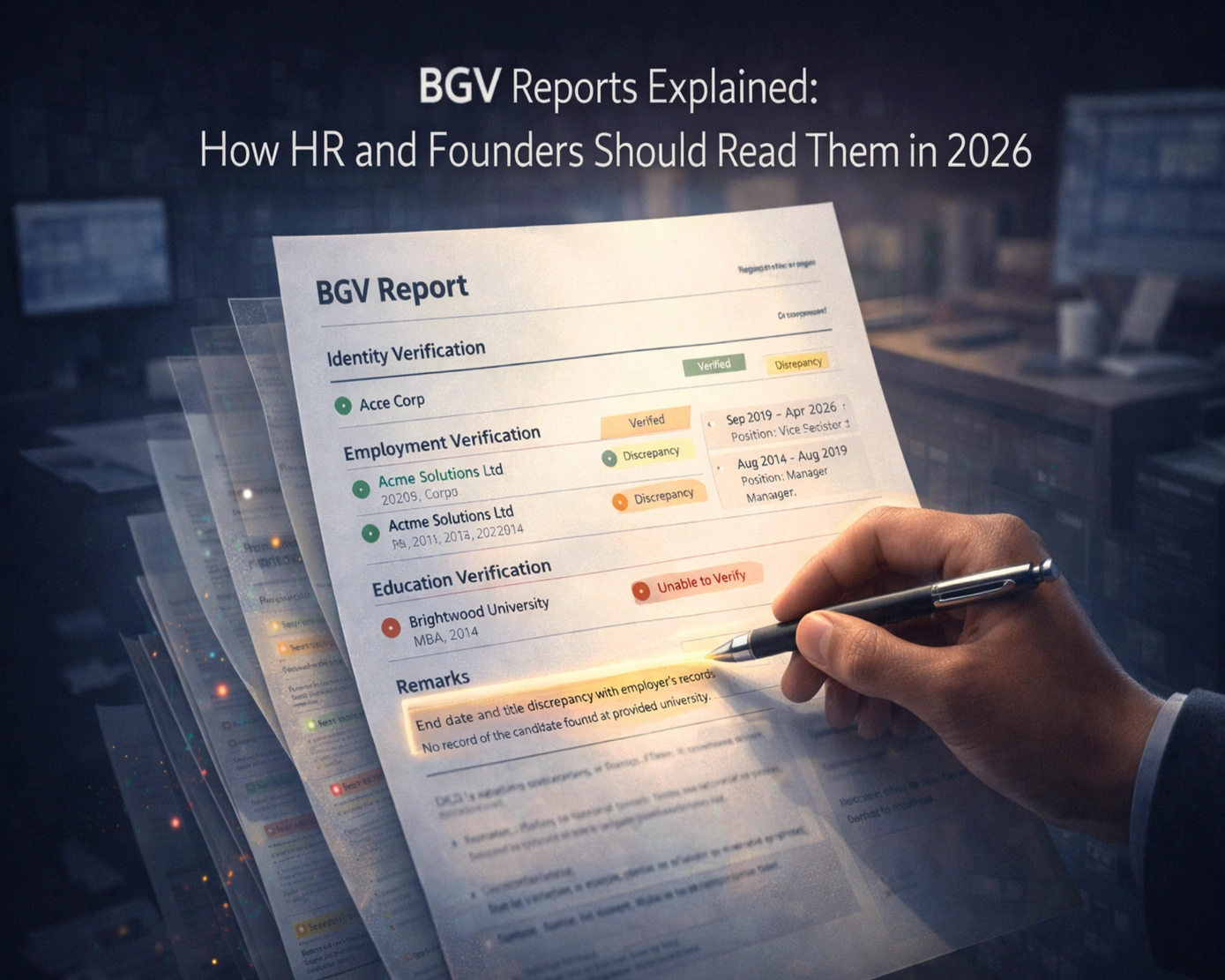
Background verification reports are meant to bring clarity — yet many HR teams and founders feel unsure while reading them. Status labels like “verified,” “discrepancy,” or “unable to verify” are often taken at face value, without understanding the context behind them.
In 2026, BGV reports are not just HR documents. They influence hiring decisions, audits, compliance reviews, and sometimes legal outcomes. Knowing how to read them correctly is essential for safe and defensible hiring.
Understanding the Purpose of a BGV Report
A background verification report is not a pass-or-fail certificate. Its purpose is to present facts, findings, and risks so decision-makers can act responsibly.
The report tells you:
-
What information was verified
-
What matched official records
-
What could not be confirmed
-
Where inconsistencies or risks exist
The final hiring decision still belongs to the organization — not the report.
Common Sections Found in BGV Reports
Most professional BGV reports in 2026 include:
-
Identity verification
-
Address verification
-
Employment history verification
-
Education verification
-
Criminal background checks
-
Reference insights (where applicable)
Each section must be reviewed independently. A clean identity check does not offset a serious employment discrepancy, and vice versa.
What “Verified” Actually Means
When a check is marked “verified,” it means the information provided by the candidate matches reliable records from authoritative sources. This does not mean the candidate is risk-free — it simply confirms accuracy for that component.
HR teams should still consider role sensitivity. A verified address is less relevant for a finance role than verified employment history and conduct.
How to Interpret “Discrepancies” Correctly
Discrepancies cause the most confusion and anxiety. Not all discrepancies indicate fraud.
Some discrepancies are minor, such as:
-
Date mismatches
-
Name variations
-
Documentation delays
Others are serious, including:
-
Fake employers
-
Inflated roles or tenure
-
Unrecognized educational institutions
The key is to assess impact, intent, and relevance to the role, not react emotionally.
“Unable to Verify” Does Not Mean Guilty
“Unable to verify” often occurs due to non-responsive employers, closed institutions, or insufficient records. It does not automatically imply wrongdoing.
However, repeated “unable to verify” outcomes across critical checks increase risk. In such cases, HR should request clarification or alternative proof before proceeding.
Why Founders Must Read Beyond the Summary
Founders often rely only on the final status or summary page. This is risky.
Important context sits in remarks, source notes, and verification comments. These details explain why a check was flagged and how conclusions were reached. Ignoring them can lead to wrong decisions — either rejecting good talent or onboarding risky hires.
Using BGV Reports for Defensible Decisions
In 2026, decisions must be defendable — internally, legally, and ethically.
Best practices include:
-
Documenting how discrepancies were evaluated
-
Recording candidate explanations
-
Aligning decisions with internal policy
-
Ensuring consistency across similar cases
BGV reports provide evidence — but only if used thoughtfully.
Role of Professional Judgment
No report replaces human judgment. HR leaders and founders must apply context, business understanding, and fairness when interpreting results.
The strongest hiring decisions come from facts supported by judgment, not automation or assumptions.

Final Thought
A background verification report is a decision-support tool — not a verdict.
Organizations that understand how to read BGV reports hire with confidence, consistency, and credibility. Those that don’t risk overreacting, underreacting, or making indefensible choices.
In 2026, the smartest companies don’t just verify —
they interpret wisely.
Leave a comments