Employee Background Re-Verification: When and Why Companies Should Do It in 2026
Why Re-Verification Is Gaining Attention in 2026
For years, background verification was treated as a one-time activity — completed at hiring and never revisited. That assumption no longer holds true in 2026.
Employees change roles, gain access to sensitive systems, move across geographies, and take on leadership responsibilities. At the same time, regulatory scrutiny, client due diligence, and insider risk awareness have increased. Together, these shifts have pushed employee background re-verification into the spotlight.
Re-verification is no longer about mistrust. It is about risk alignment over time.
What Employee Re-Verification Actually Means
Employee background re-verification does not mean repeating the entire hiring verification process. It involves selectively re-checking specific elements of an employee’s background when risk exposure changes.
This may include re-validating employment status, criminal records, address information, or conflict-of-interest disclosures. The scope depends on role sensitivity, access level, and business context — not tenure alone.
When Companies Should Consider Re-Verification
Re-verification is most relevant at risk transition points, not arbitrarily.
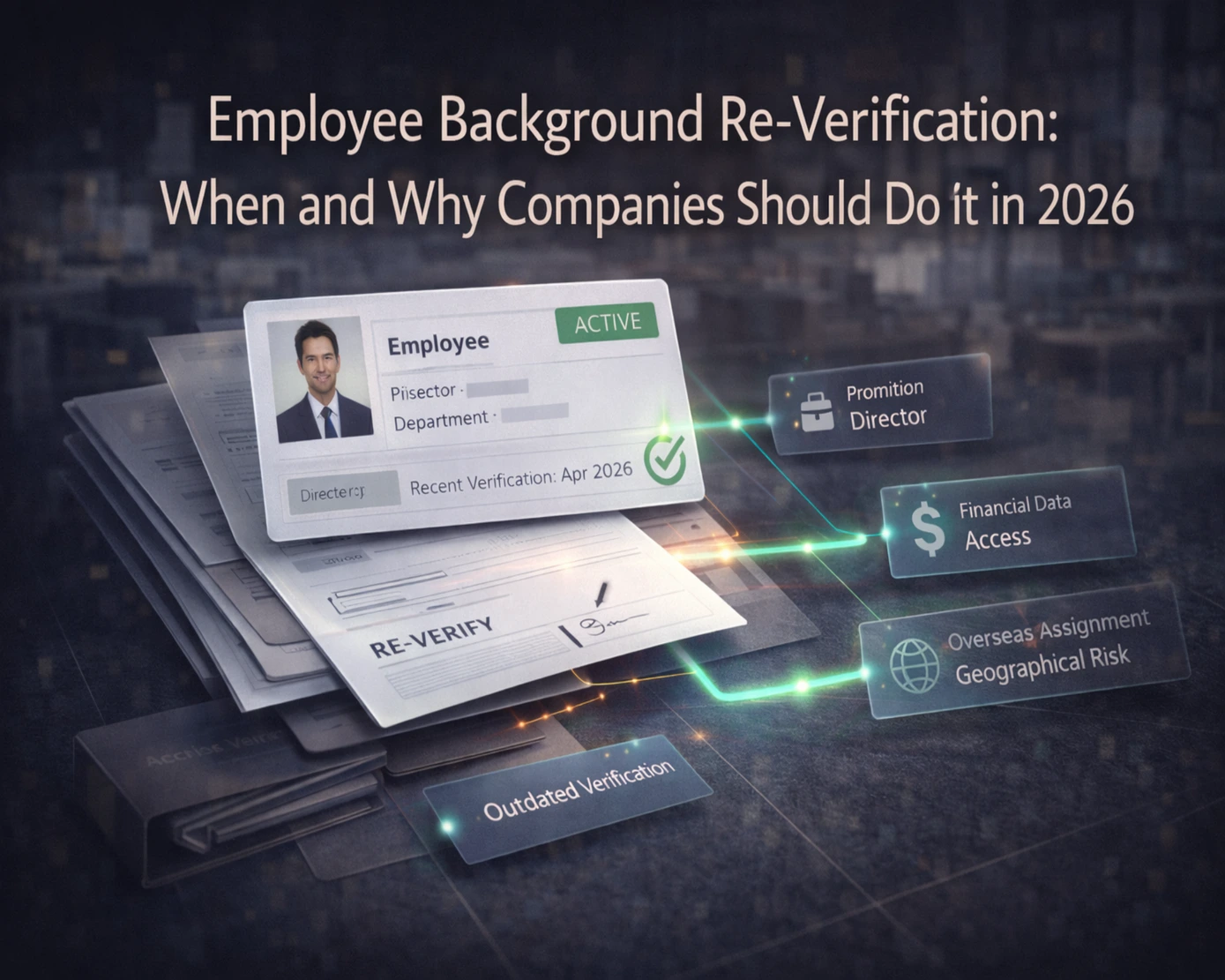
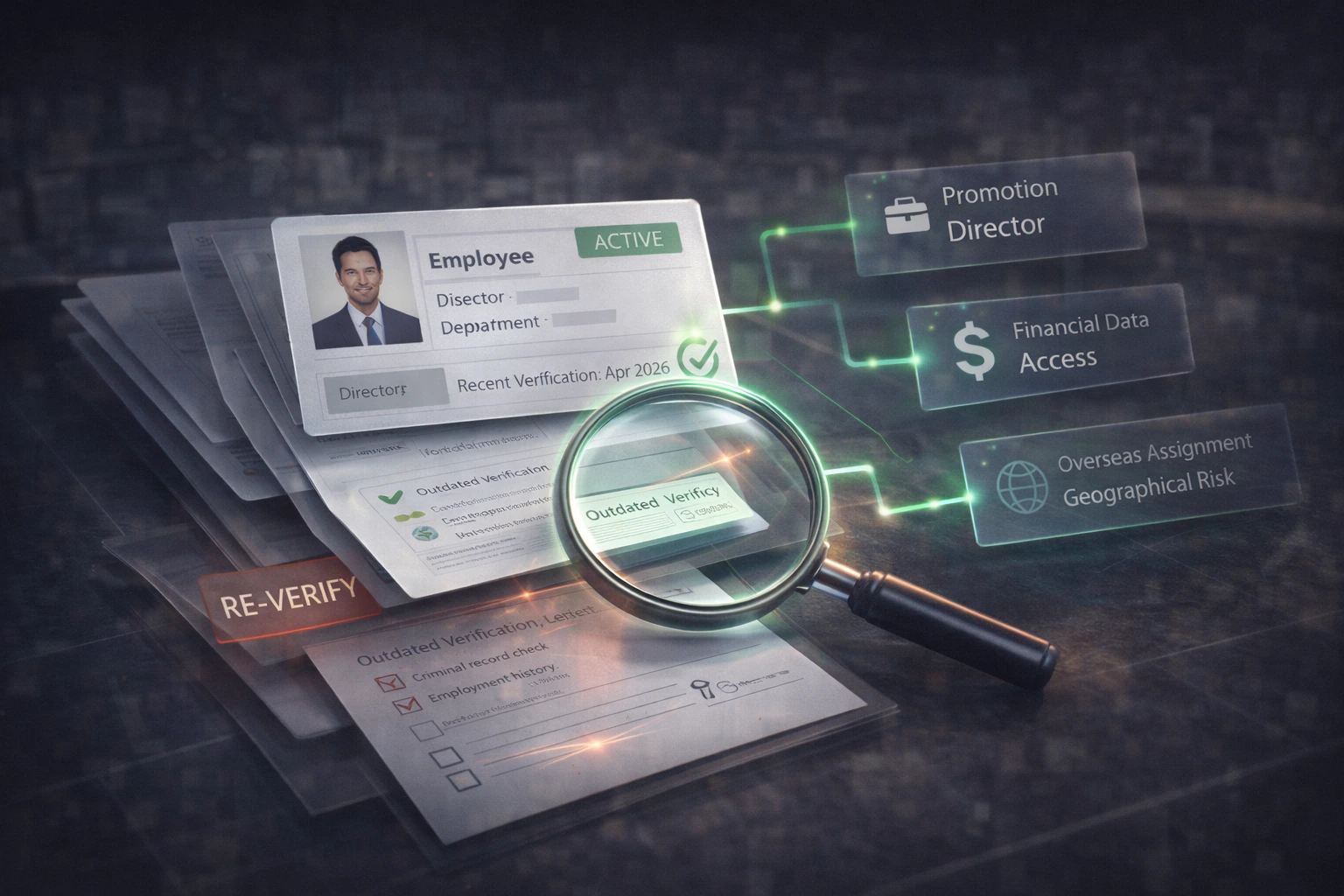
Common triggers include promotions to leadership roles, movement into finance or compliance functions, access to customer or financial data, overseas assignments, mergers and acquisitions, or client-mandated audits.
In each case, the employee’s risk profile changes, and verification should reflect that change.
Why One-Time Verification Is No Longer Enough
A clean background at the time of joining does not guarantee low risk forever. Circumstances evolve. Employees may take on undisclosed external work, face legal issues, or change residency without updating records.
In regulated industries and client-facing roles, relying on outdated verification exposes organizations to blind spots that audits and incidents later uncover.
Re-verification ensures that trust remains current, not assumed.
Addressing the Fear of Employee Pushback
One of the biggest concerns HR teams have is employee reaction. Re-verification is often perceived as intrusive or distrustful if poorly communicated.
However, when positioned correctly — as a standard governance or client requirement applied consistently — re-verification is widely accepted. Transparency matters. Employees should understand why checks are being conducted and what data is involved.
Organizations that communicate clearly face far less resistance.
Legal and Compliance Considerations in 2026
In 2026, re-verification must follow the same consent, data protection, and documentation standards as initial verification.
Consent should be obtained again where required, scope should be limited to legitimate business need, and data retention policies must be followed strictly. Informal or silent checks introduce compliance risk — even for long-serving employees.
Structured processes protect both the employer and the employee.
How Re-Verification Supports Leadership and Clients
From a leadership perspective, re-verification provides confidence when assigning responsibility or authority. It ensures that access decisions are defensible and risk-aware.
For enterprise clients and regulators, re-verification demonstrates proactive governance. It shows that the organization manages people risk continuously, not reactively.
Re-Verification Is About Governance, Not Surveillance
The goal of re-verification is not to monitor employees — it is to maintain alignment between trust and responsibility.
When applied selectively, transparently, and consistently, re-verification strengthens organizational integrity without harming culture. In fact, it reassures teams that standards apply equally to everyone.
Final Thought
In 2026, background verification is no longer a one-time checkbox. It is an ongoing risk management practice that evolves with roles, access, and business realities.
Employee re-verification helps organizations stay compliant, protect sensitive assets, and make confident leadership decisions — without compromising trust.
Trust is strongest when it is verified at the right time
Leave a comments