How to Communicate Background Verification to Candidates Without Losing Them
Why Communication Matters More Than the Verification Itself
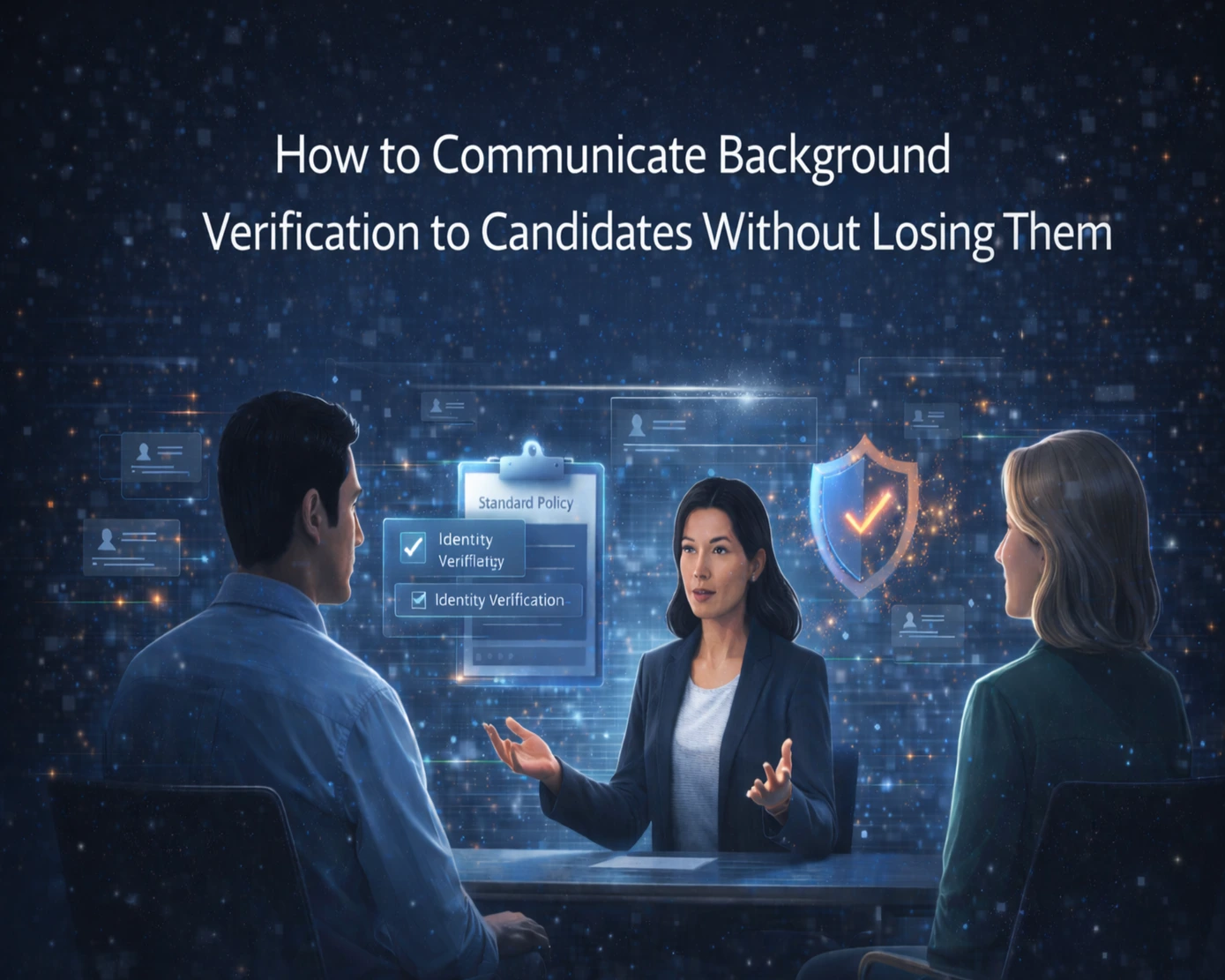
Most candidate resistance to background verification does not come from the process — it comes from how the process is communicated. When candidates feel surprised, confused, or mistrusted, they disengage. When they feel informed and respected, verification becomes a non-issue.
Strong communication turns background verification from a perceived hurdle into a normal part of professional hiring.
The Biggest Mistake HR Teams Make
Many HR teams introduce background verification too late — often after the offer is released or during onboarding. By then, candidates are emotionally invested and more sensitive to additional requirements.
Late communication creates anxiety and suspicion. Candidates start asking questions not because they object, but because they were not prepared.
Early, clear communication prevents this friction.
Set Expectations at the Right Time
The best time to communicate background verification is before the offer stage. This does not mean overwhelming candidates with details during the first conversation, but clearly stating that verification is a standard part of the hiring process.
When candidates know what to expect, they are less likely to resist later.
Explain the “Why,” Not Just the “What”
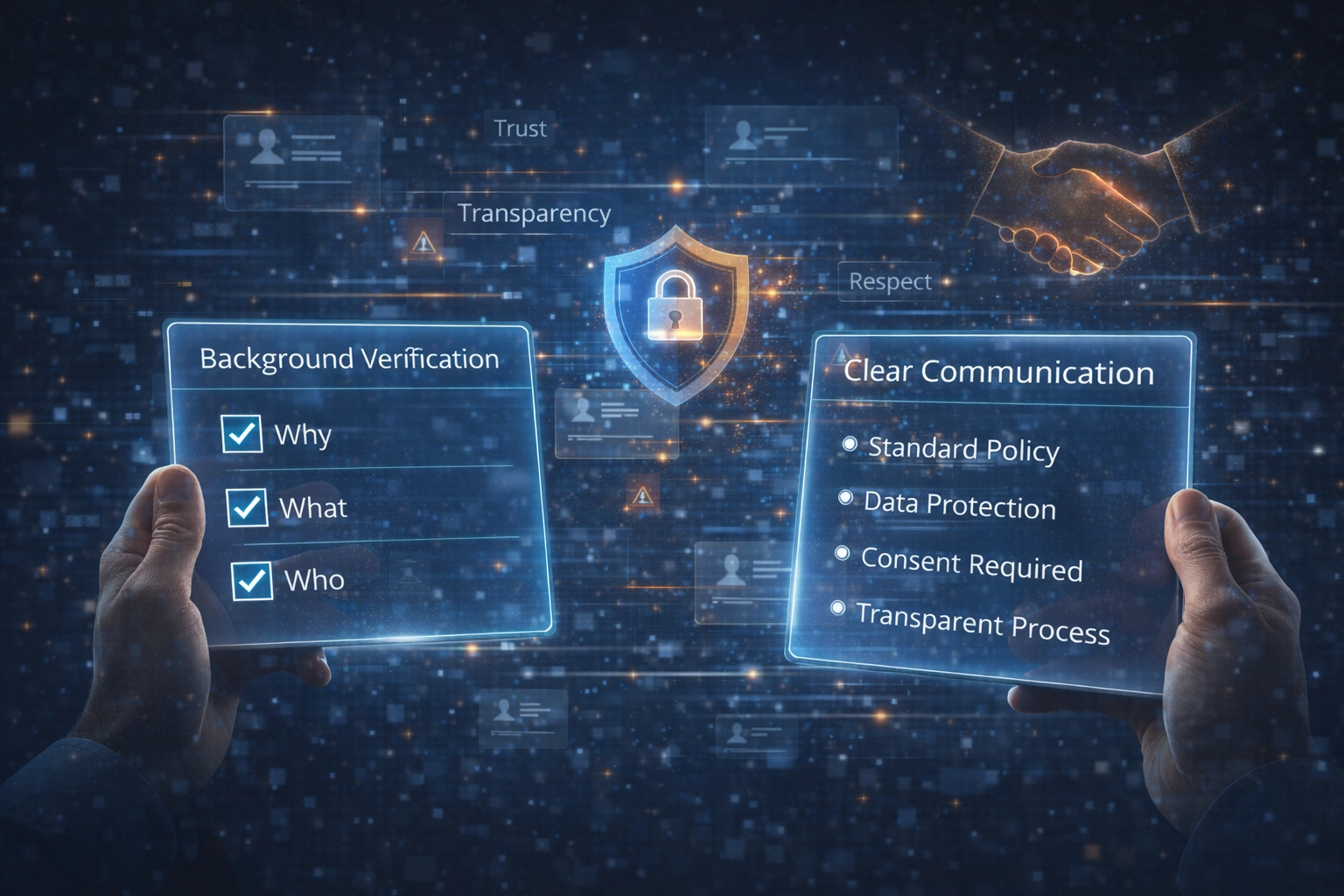
Candidates are more cooperative when they understand why verification exists. HR should explain that background verification:
-
Is applied consistently to all hires
-
Protects both the company and the employee
-
Supports compliance and client requirements
-
Helps ensure fair hiring decisions
This framing removes the sense of personal scrutiny.
Be Clear About Scope and Data Protection
Vague explanations create fear. HR should clearly state:
-
What information will be verified
-
Who will conduct the verification
-
How data will be stored and protected
-
That consent is required and respected
Transparency builds trust and reduces drop-offs.
Use Neutral, Professional Language
Language matters. Phrases that imply suspicion or investigation should be avoided. Instead, HR should use neutral, professional language that positions verification as a routine process.
For example, saying “This is a standard part of our hiring process” is far more effective than “We need to verify your background before trusting you.”
Address Concerns Without Defensiveness
When candidates raise questions or concerns, HR should respond calmly and informatively. Defensive or dismissive responses escalate tension.
Most concerns can be resolved by explaining timelines, data handling, and the verification partner’s role. This conversation also helps identify candidates who may later resist verification more strongly.
Avoid Making Exceptions
One of the fastest ways to lose credibility is making exceptions. Allowing some candidates to bypass verification while enforcing it for others creates inconsistency and future disputes.
Consistency reassures candidates that verification is a standard policy, not a personal judgment.
Align Hiring Managers With HR Messaging
Mixed messages from HR and hiring managers confuse candidates. If managers downplay verification while HR enforces it later, trust breaks down.
Alignment ensures candidates receive one clear, consistent message throughout the hiring journey.
Final Thought
Candidates do not reject background verification — they reject surprise, ambiguity, and poor communication.
HR teams that communicate clearly, early, and professionally retain candidate trust while protecting hiring standards. Verification done transparently strengthens employer brand instead of harming it.
Clarity builds confidence — on both sides of the hiring table
Leave a comments