Remote Hiring Fraud in India: Risks Companies Are Still Ignoring in 2026
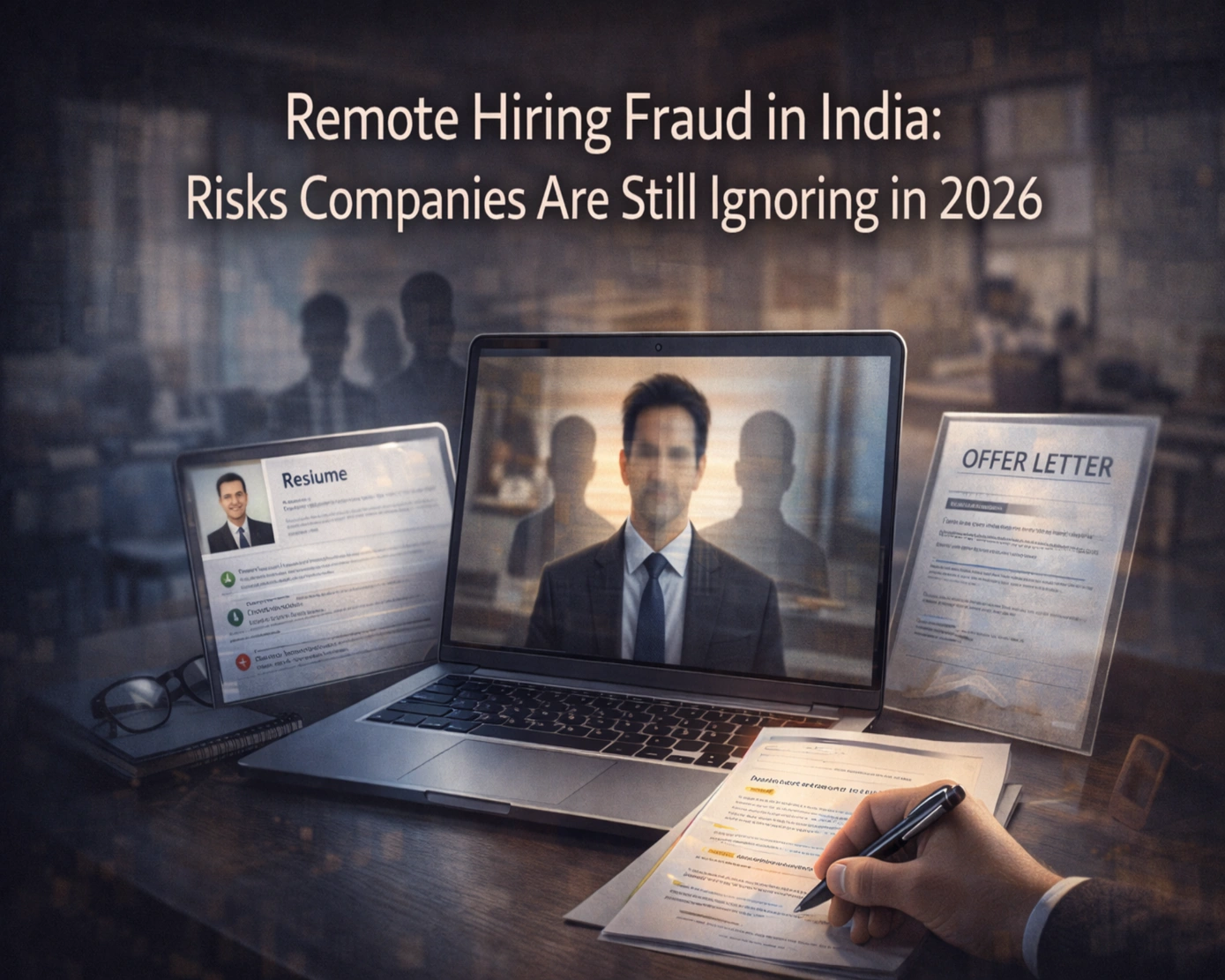
Remote Hiring Has Matured — Fraud Has Too
Remote hiring is no longer new in India. By 2026, it is a permanent hiring model across IT, startups, consulting, and global delivery teams. While organizations have adapted their recruitment processes, fraud tactics have evolved just as quickly.
What makes remote hiring fraud dangerous is not its visibility — it is how quietly it blends into normal hiring workflows. Most companies do not realize they have been affected until there is a delivery failure, data exposure, or compliance escalation.
What Remote Hiring Fraud Looks Like in Reality
Remote hiring fraud is rarely dramatic. It often appears normal at the surface.
Some candidates clear interviews using borrowed expertise, proxy interviewers, or rehearsed responses. Others submit authentic-looking documents supported by fabricated employers or shell companies. In more advanced cases, employees join remotely under one identity while another person actually performs the work.
There are also cases where candidates disappear after onboarding, misuse access credentials, or work simultaneously for multiple organizations without disclosure.
These scenarios are not exceptions anymore — they are patterns.
Why Traditional Hiring Controls Fail Remotely
Traditional hiring relied heavily on physical presence. Office visits, document submission, in-person onboarding, and informal validation provided natural checkpoints.
Remote hiring removes these layers. HR teams depend on digital documents, video calls, and self-declared information. Without structured verification, there is no reliable way to confirm whether what looks legitimate actually is.
Even experienced recruiters struggle to detect fraud when the process is rushed or volumes are high.
The Business Impact of Remote Hiring Fraud
Remote hiring fraud affects more than just productivity. Unverified hires with system access create serious data security risks. Client-facing roles introduce reputational exposure. Compliance-sensitive positions can trigger regulatory scrutiny.
From a leadership perspective, the biggest cost is not replacement hiring — it is loss of trust. Once clients, investors, or internal teams lose confidence, recovery is slow and expensive.
Why Fraud Often Goes Undetected for Months
Remote hiring fraud is difficult to spot early because initial performance may appear acceptable. Fraudulent hires often rely on external support, copied work, or limited task engagement.
Problems surface when deeper ownership is required — system changes, client interaction, audits, or independent decision-making. By then, access has already been granted and damage may have occurred.
How Background Verification Reduces Remote Hiring Risk
Background verification introduces independent validation into a process that otherwise relies on self-reporting.
Employment verification exposes fake or overlapping work history. Address and identity checks establish traceability. Reference verification surfaces behavioral patterns that interviews cannot capture. Role-based checks ensure that access aligns with verified credibility.
In remote hiring, verification is not optional — it is the only objective checkpoint.
Prevention Requires Process, Not Policing
Preventing remote hiring fraud is not about surveillance or distrust. It is about designing hiring processes that assume risk and manage it responsibly.
Clear verification policies, mandatory pre- or early post-joining checks, restricted access until verification completion, and leadership alignment are essential. Organizations that rely only on trust create blind spots that fraud exploits.
Why Leadership Must Own Remote Hiring Risk
Remote hiring fraud is not an HR failure — it is a governance risk. CEOs and founders remain accountable for data breaches, client incidents, and compliance failures regardless of where employees work from.
Organizations that treat remote hiring risk seriously embed verification into hiring strategy, not as a reaction after problems arise.

Final Thought
Remote hiring in 2026 offers scale and flexibility — but it also demands stronger safeguards. Fraud thrives where verification is absent and assumptions replace evidence.
Companies that protect remote hiring with structured background verification do not slow down hiring — they protect their business, their data, and their reputation.
In a remote-first world, trust must be verified
Leave a comments