Resume vs Reality: Why Great Interviews Still Result in Bad Hires
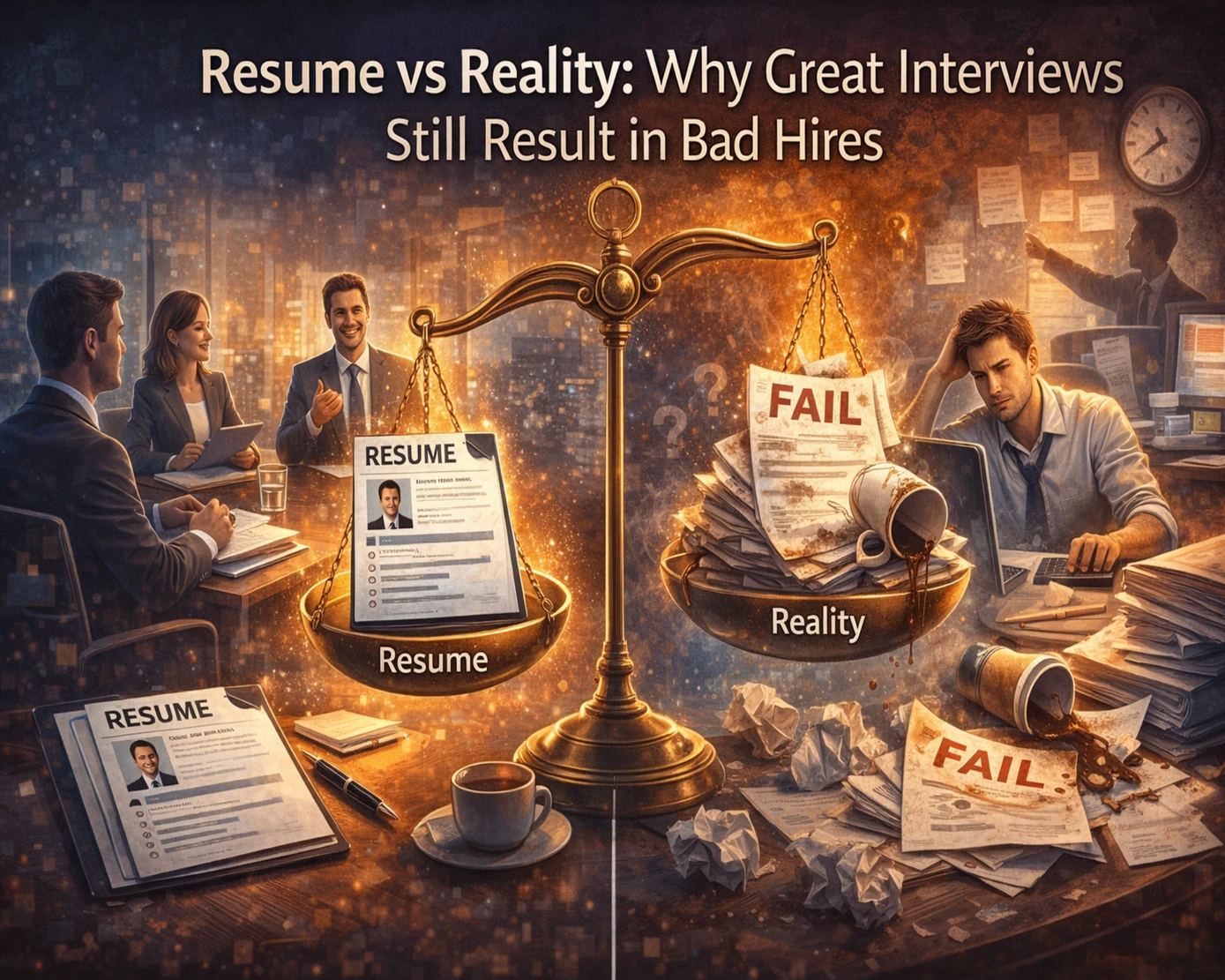
The Hiring Paradox HR Faces Every Day
Few things frustrate HR leaders and founders more than this scenario:
The resume looks strong. The interview goes exceptionally well. Stakeholders are impressed. The candidate joins — and within weeks or months, it becomes clear the hire was a mistake.
This is not a rare failure. It is a structural gap in how modern hiring evaluates people. Interviews assess communication and confidence. Resumes highlight achievements. Neither reliably confirms truth, consistency, or real-world behavior.
Why Resumes Are Designed to Impress, Not Verify
Resumes are marketing documents. Candidates optimize them to stand out, not to be audited. Job titles are polished, responsibilities are stretched, and achievements are framed generously.
This does not always mean dishonesty — but it does mean resumes are self-curated narratives, not evidence. When hiring decisions rely too heavily on resumes, organizations reward presentation over verification.
Interviews Measure Skill Expression, Not Skill Depth
Strong interview performance often reflects preparation, articulation, and confidence. Candidates rehearse answers, study role expectations, and mirror language interviewers want to hear.
What interviews rarely reveal is:
-
How consistently the candidate performed
-
Whether they worked independently or with heavy support
-
How they handled pressure, failure, or accountability
This gap explains why someone can sound exceptional in interviews but struggle in execution.
The Confidence Trap
One of the most common hiring biases is equating confidence with competence. Confident candidates are persuasive, decisive, and engaging — especially in leadership or client-facing roles.
However, confidence without verification can mask shallow experience, exaggerated exposure, or dependence on others. Once hired, this gap surfaces as missed deadlines, poor decision-making, or team friction.
Why Reference Checks Often Fail to Catch the Truth
Traditional reference checks are limited. Most references are curated and prepared. They confirm employment and avoid negative commentary.
While references have value, they rarely surface behavioral risk, performance gaps, or integrity issues unless structured carefully. Without independent verification, reference checks often reinforce the resume narrative instead of challenging it.
The Cost of Discovering Reality Too Late
Bad hires rarely fail immediately. They pass onboarding, settle in, and begin working — often with support from others. Problems surface when deeper ownership, autonomy, or accountability is required.
By then, organizations have invested time, training, access, and trust. Exiting becomes harder, and teams absorb the cost quietly.
This delayed impact is why bad hires are so expensive.
Where Background Verification Changes the Outcome
Background verification introduces evidence into a process dominated by perception.
Employment verification confirms whether experience claimed actually existed and at what level. Education verification ensures foundational qualifications are genuine. Reference insights add behavioral context interviews miss.
Verification does not replace interviews — it balances them.
Hiring Is a Risk Decision, Not a Talent Guess
The biggest shift organizations must make is viewing hiring as a risk decision, not just a talent selection exercise.
Interviews assess potential. Verification manages risk. When both work together, hiring outcomes improve significantly.
Companies that skip verification are not moving faster — they are postponing risk.
Why Leadership Must Care About This Gap
For founders and CXOs, bad hires erode execution, culture, and credibility. The cost is not just attrition — it is lost momentum and leadership distraction.
Strong hiring governance protects leadership time and organizational focus.

Final Thought
Great interviews do not guarantee great hires. Resumes impress, conversations persuade — but facts confirm.
Organizations that balance human judgment with background verification reduce costly hiring mistakes and build teams on truth, not assumption.
Hiring succeeds when reality is verified — not discovered later
Leave a comments