Termination After Background Verification Failure: HR Dos and Don’ts
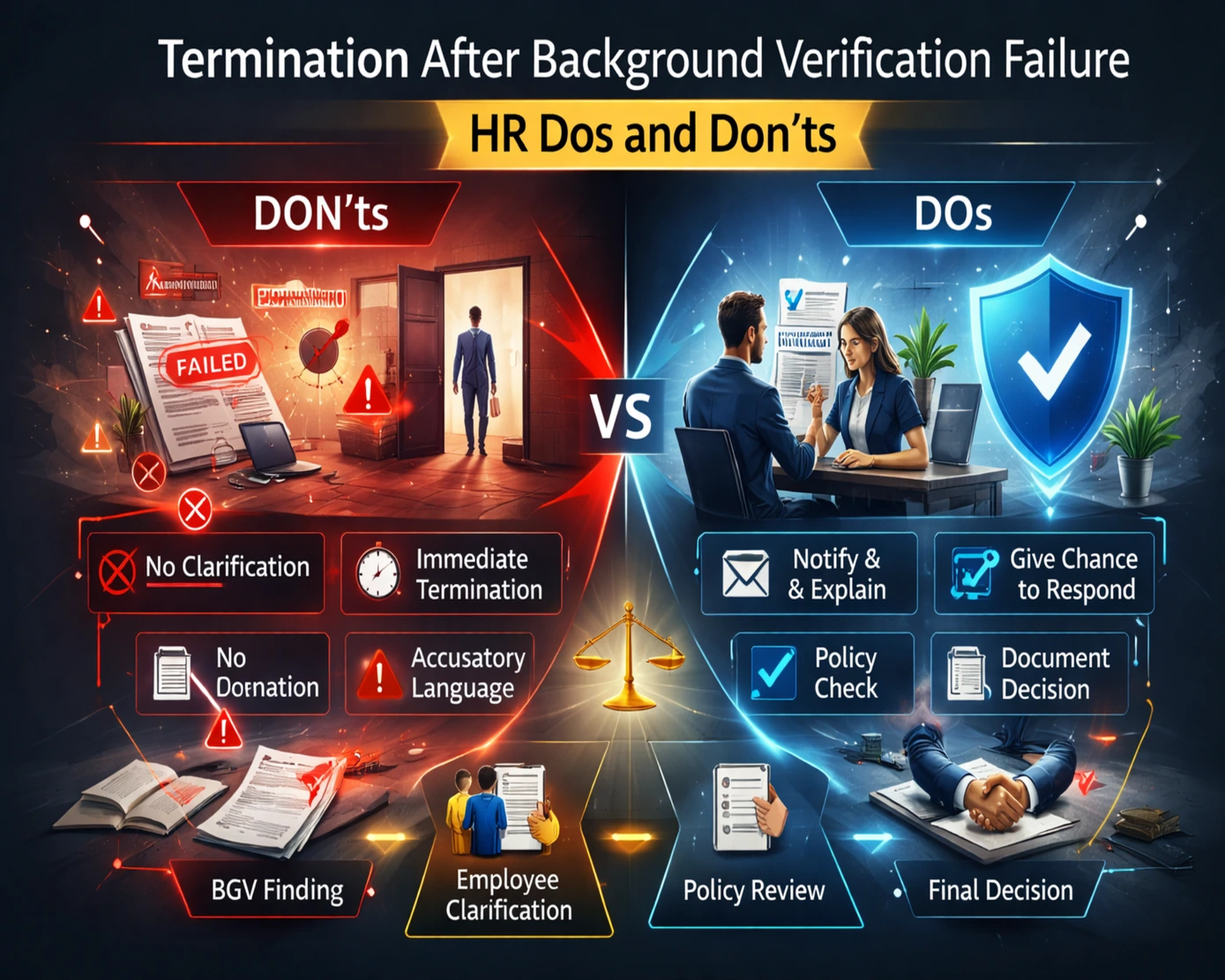
Why This Is One of the Most Sensitive HR Decisions
Termination linked to background verification is never just an operational decision. It carries emotional, legal, cultural, and reputational consequences. When handled poorly, it can escalate into disputes, social media backlash, or internal distrust. When handled professionally, it reinforces governance and hiring discipline.
The challenge for HR is balancing fairness with risk — especially when verification issues surface after the employee has already joined.
First Principle: Verification Findings Are Not Verdicts
Background verification provides information, not automatic conclusions. HR’s role is to interpret findings responsibly before taking action.
Not every failed check warrants termination. Minor discrepancies, documentation gaps, or unverifiable records require context. Immediate termination without assessment is one of the biggest mistakes organizations make.
Do: Review the full report and understand the nature of the issue
Don’t: React only to summary status labels
Do: Assess Intent, Impact, and Role Sensitivity
Before considering termination, HR should evaluate:
-
Was the misrepresentation intentional or accidental?
-
Does it affect role capability, trust, or compliance?
-
Is the role high-risk (data, finance, leadership, clients)?
Termination decisions should be risk-based, not emotionally driven. The same discrepancy may have different consequences in different roles — but the reasoning must be documented.
Don’t: Skip the Employee Clarification Step
One of the fastest ways to create legal exposure is terminating without giving the employee a chance to respond.
Even when evidence appears strong, HR must:
-
Inform the employee of the findings
-
Allow them to explain or submit clarification
-
Record the interaction objectively
This step protects the organization and demonstrates procedural fairness.
Do: Rely on Policy, Not Ad-Hoc Judgment
Termination decisions should always reference internal policy or employment terms. Acting outside documented policy creates inconsistency and weakens defensibility.
If policy is unclear or silent, HR should escalate internally before acting. Making “one-off” decisions under pressure often leads to future disputes.
Don’t: Use Accusatory or Emotional Language
Language used during termination matters. Words implying fraud, dishonesty, or intent can escalate conflict unnecessarily.
HR communication should remain factual, neutral, and professional. The focus should be on policy non-alignment, not moral judgment.
Do: Document Everything
Documentation is HR’s strongest safeguard. This includes:
-
Background verification reports
-
Candidate or employee explanations
-
Internal review notes
-
Approval or escalation records
-
Final termination communication
If a decision is questioned later, documentation speaks louder than intent.
Don’t: Assume Probation Makes Termination Risk-Free
Even during probation, termination must appear reasonable and consistent. Courts and authorities often examine whether due process was followed — not just contract clauses.
Background verification-based termination during probation should still follow explanation, documentation, and policy alignment.
Do: Align Leadership Before Acting
HR should never terminate in isolation. Leadership alignment ensures:
-
Decisions are supported
-
Risk appetite is agreed upon
-
HR is not pressured to reverse decisions later
This alignment also reinforces governance culture across the organization.
Don’t: Rush for Convenience
It is tempting to terminate quickly to close the issue. However, rushed terminations often resurface later as complaints, disputes, or brand damage.
Taking time to follow process reduces long-term risk significantly.
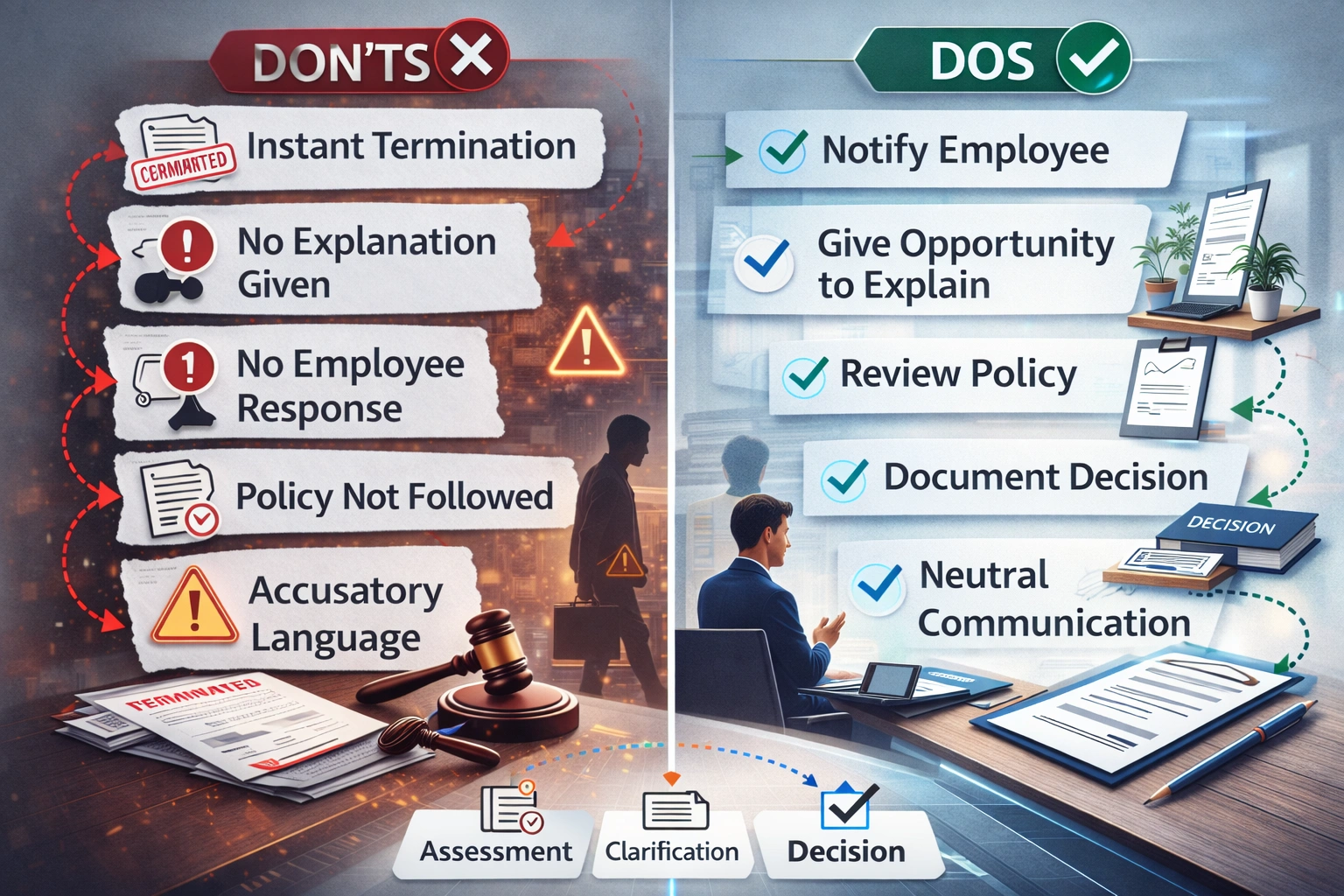
Final Thought
Termination after background verification failure is not about punishment — it is about protecting trust, compliance, and organizational integrity.
Organizations that handle these situations with fairness, clarity, and documentation reduce legal exposure and strengthen hiring discipline.
Strong HR teams don’t avoid difficult decisions — they make them defensibly.
Leave a comments