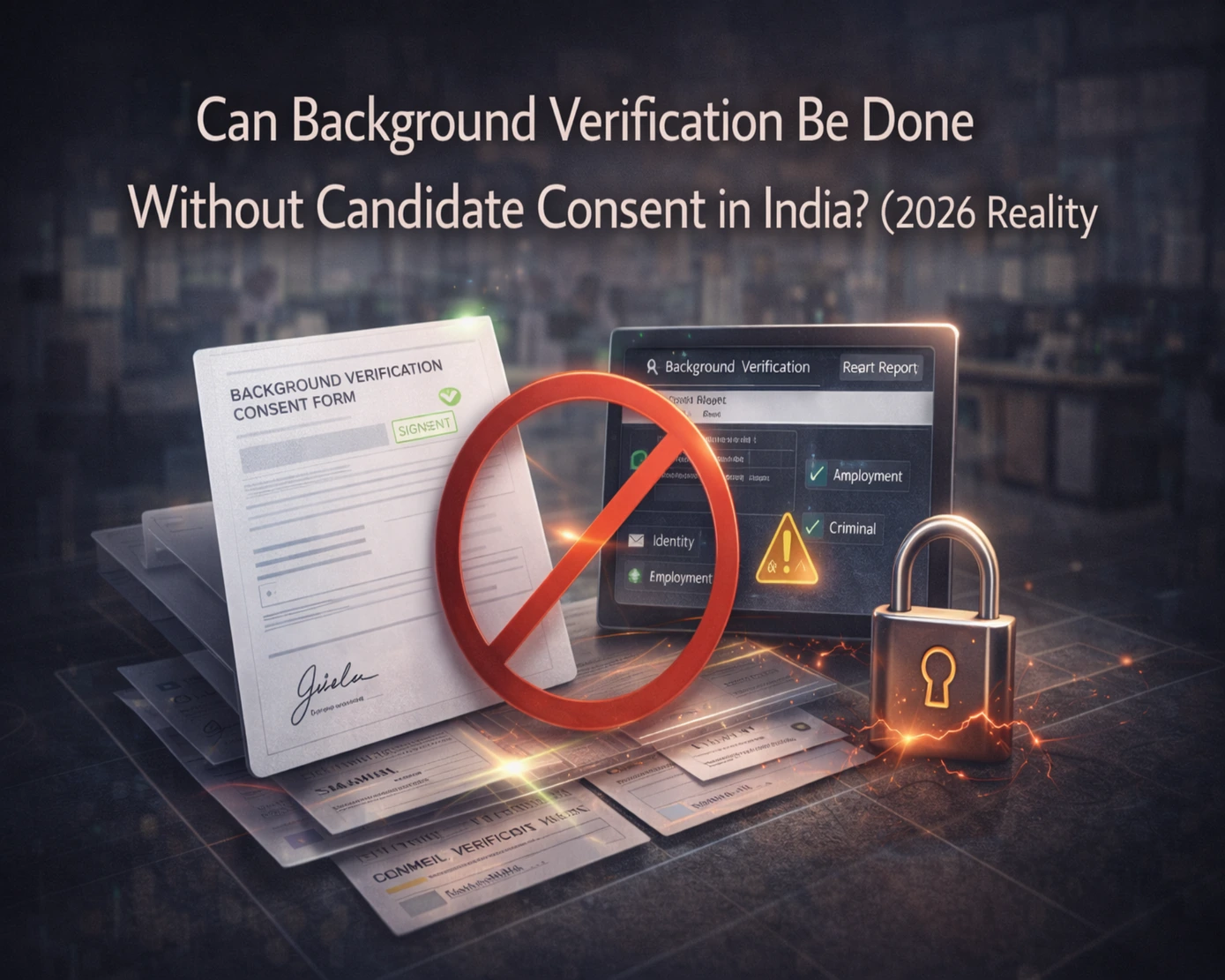
Can Background Verification Be Done Without Candidate Consent in India?
Why This Question Keeps Coming Up
In 2026, HR teams are under pressure from two sides. On one hand, hiring risks like fake experience, moonlighting, and remote fraud are increasing. On the other, data protection laws and candidate awareness have made consent a sensitive issue.
This creates a common question inside HR and leadership rooms:
Can background verification be done without informing or taking consent from the candidate?
The short answer is — doing so creates serious legal and governance risk. The longer answer requires context.
Why Consent Matters More Than Ever in 2026
Background verification involves collecting and processing personal data such as identity details, address history, employment records, education credentials, and sometimes criminal information.
Under India’s data protection framework in 2026, employers are responsible for how this data is collected, processed, stored, and shared. Consent is not a courtesy — it is a legal and ethical foundation.
Without documented consent, even accurate verification can become indefensible.
Common Situations Where Companies Skip Consent
Some organizations still attempt verification without explicit consent in situations such as:
-
Post-joining checks done quietly
-
Informal reference calls
-
Online database searches
-
Social media screening
-
Emergency or urgent hiring
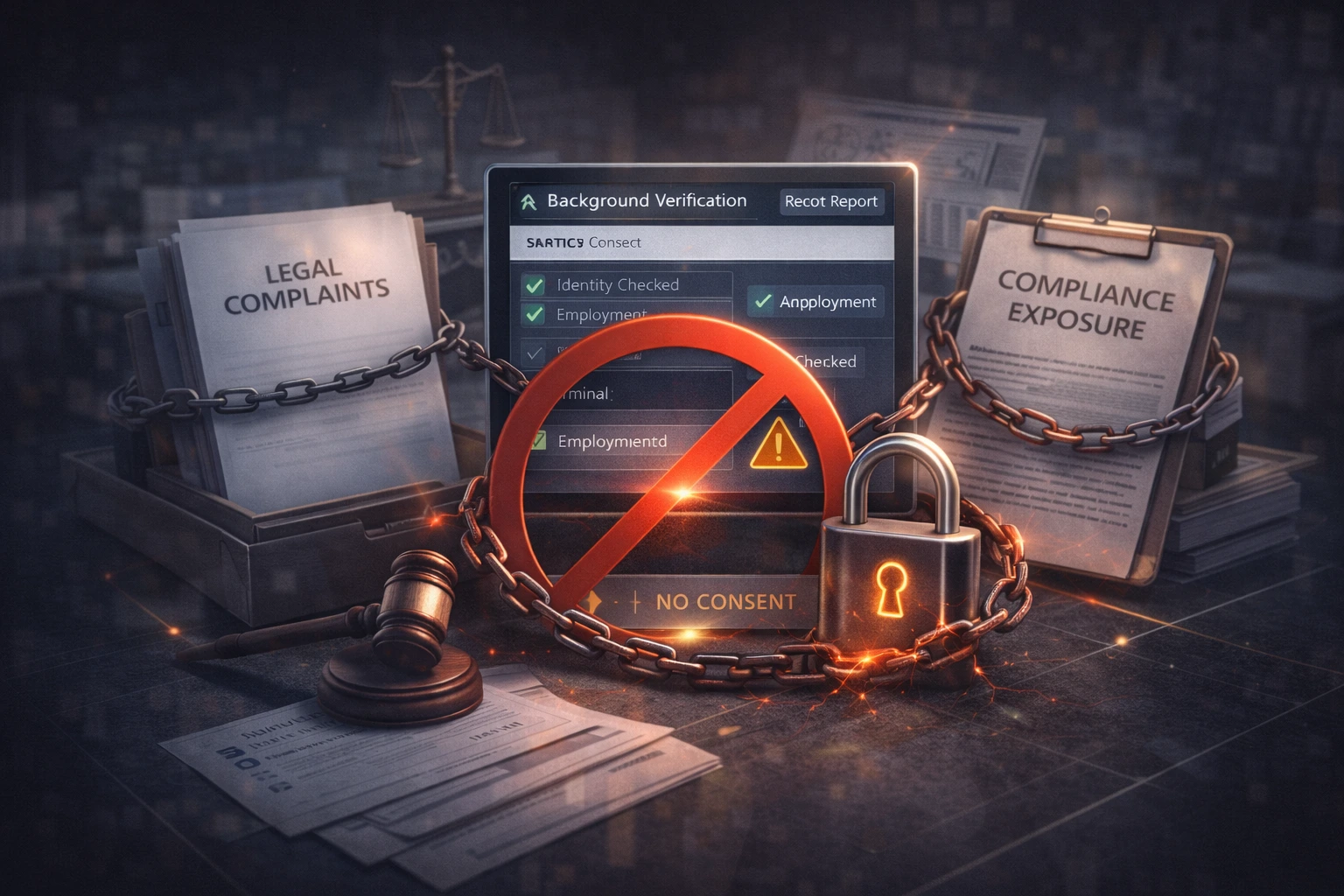
These practices often happen with good intentions — but intention does not protect against compliance exposure.
What Happens If Verification Is Done Without Consent
Conducting background verification without consent can expose companies to:
-
Legal complaints from employees or candidates
-
Regulatory scrutiny and penalties
-
Loss of trust with employees and unions
-
Reputational damage if escalated publicly
-
Weak legal defensibility during disputes
Even if misrepresentation is discovered, lack of consent weakens the employer’s position.
Is There Any Situation Where Consent Is Not Required?
In limited scenarios, organizations may rely on publicly available information or internal employment records. However, these do not replace formal background verification and cannot be treated as comprehensive checks.
For third-party verification, employer-to-employer checks, criminal record searches, or database validation, explicit consent is still expected in most professional hiring contexts.
In 2026, the risk of assuming “implied consent” is extremely high.
How Smart HR Teams Handle Consent Properly
Compliant organizations now:
-
Collect separate, explicit consent for background verification
-
Clearly explain the scope of checks
-
Inform candidates about third-party verification partners
-
Maintain consent records for audits and disputes
-
Allow candidates to ask questions or raise concerns
This approach does not slow hiring — it strengthens trust and defensibility.
Why Transparency Actually Reduces Hiring Risk
Contrary to fear, transparent consent processes discourage fraudulent candidates. Individuals with fake experience or undisclosed issues often withdraw when verification is clearly communicated.
In this way, consent is not just compliance — it is risk filtering.
Leadership Perspective: Why Cutting Corners Backfires
For CEOs and founders, the temptation to bypass consent usually comes from urgency. However, one compliance incident or legal escalation costs far more than a few extra verification steps.
Leadership accountability remains intact regardless of whether HR initiated the process. In 2026, “we didn’t know” is not an acceptable defense.
Final Thought
In India, background verification without candidate consent is no longer a grey area — it is a high-risk shortcut.
Responsible organizations in 2026 verify transparently, document consent, and protect both the business and the candidate. Trust built through clarity lasts longer than trust assumed silently.
Verification without consent may uncover risk — but it creates bigger risk in return
Leave a comments