Can an Employee Take Legal Action if Background Verification Fails?
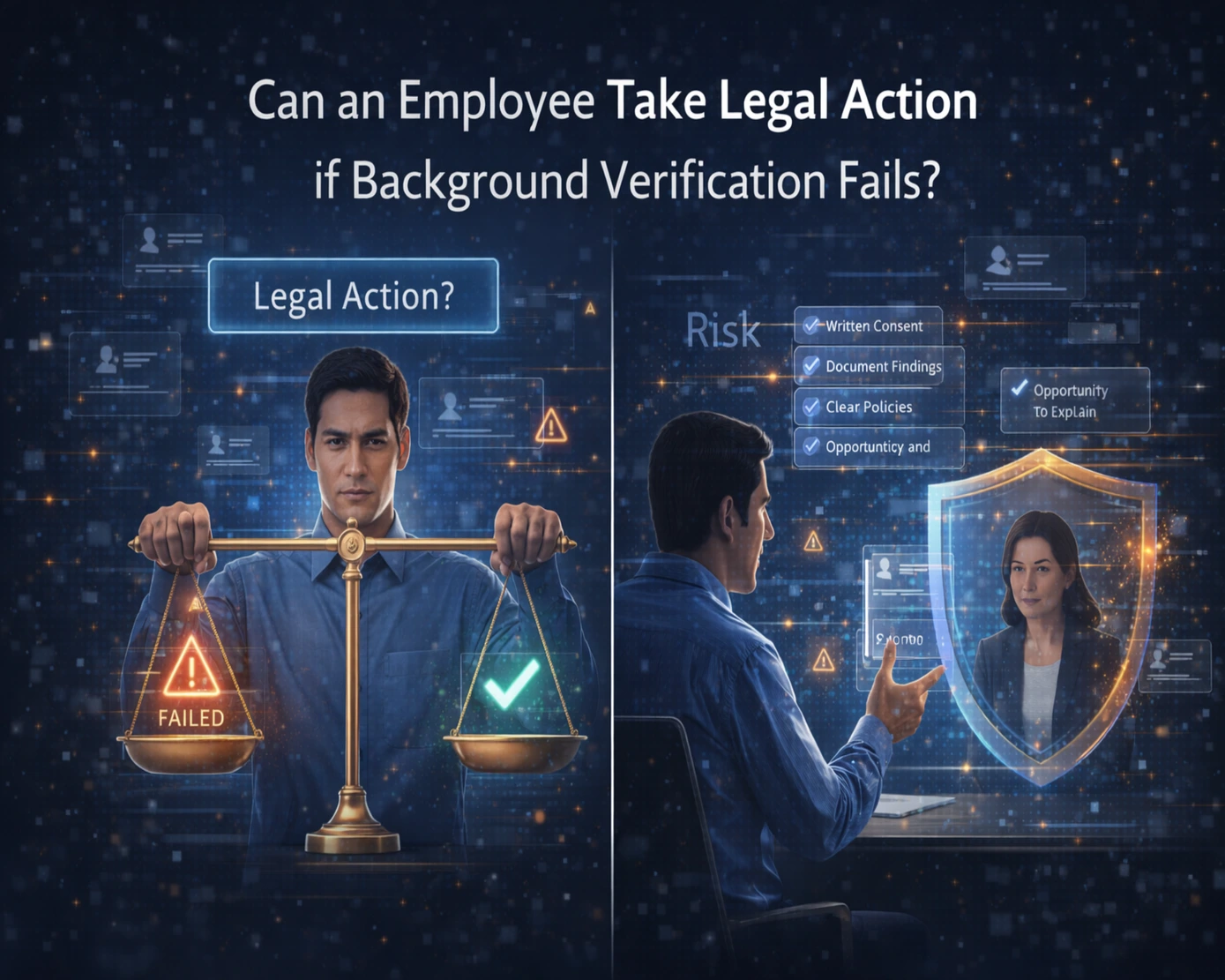
Why HR Teams Worry About This Question
Whenever background verification flags an issue — especially after an offer is issued or an employee has joined — HR teams immediately think about legal risk. The fear is understandable. Decisions taken at this stage feel exposed, emotional, and highly visible.
The key thing to understand is this:
Legal risk does not come from background verification itself. It comes from how the process is handled.
What “BGV Failure” Actually Means in Legal Terms
From a legal perspective, background verification does not “fail” on its own. It produces findings. Legal risk arises when:
-
Decisions are taken without giving the employee a chance to explain
-
Policies are unclear or inconsistently applied
-
Actions are taken without documentation
-
Verification is conducted without proper consent
Courts and authorities usually examine process, fairness, and intent, not just outcomes.
Can a Candidate or Employee Take Legal Action?
Yes, an employee or candidate can initiate legal action or raise a complaint — but success depends on circumstances.
Legal challenges typically arise when:
-
An offer is withdrawn without explanation
-
Employment is terminated abruptly without process
-
Background checks are done without consent
-
Decisions appear arbitrary or discriminatory
However, initiating action does not automatically mean the employer is at fault.
When Employers Are on Strong Legal Ground
Employers are generally well-protected when:
-
Background verification is clearly stated as a hiring condition
-
Written consent is obtained
-
Findings are documented
-
The employee is given an opportunity to clarify
-
Decisions are aligned with internal policy
-
Similar cases are handled consistently
In such cases, even if a dispute arises, employers can demonstrate reasonable and fair conduct.
Common Mistakes That Create Legal Exposure
Most legal issues arise not because of verification results, but because of poor handling.
High-risk mistakes include:
-
Silent withdrawal of offers without explanation
-
Immediate termination without investigation
-
Using informal or undisclosed checks
-
Making exceptions for some candidates but not others
-
Poorly worded communication that sounds accusatory
Avoiding these mistakes significantly reduces risk.
Importance of Documentation
Documentation is the employer’s strongest defence. This includes:
-
Signed consent forms
-
Verification reports
-
Records of candidate communication
-
Notes on internal review and decision-making
-
References to company policy
When documentation exists, disputes are far less likely to escalate.
Probation Period Does Not Mean No Risk
Some employers assume probation allows unrestricted termination. This is a misconception.
Even during probation, actions must appear reasonable and procedurally fair. Background verification findings discovered during probation should still be handled with communication and documentation.
Role of Clear Policies and Communication
Organizations with clearly defined background verification policies face fewer legal challenges. When candidates are informed upfront and processes are transparent, disputes reduce significantly.
Clarity protects both sides.
Leadership’s Role in Reducing Legal Risk
HR should not carry legal risk alone. Leadership alignment ensures that:
-
Verification policies are enforced consistently
-
Decisions are supported and documented
-
Hiring urgency does not override governance
This shared accountability strengthens the employer’s position.
Final Thought
Yes, an employee can question or challenge a background verification-based decision.
But employers who act transparently, consistently, and professionally are rarely on the losing side.
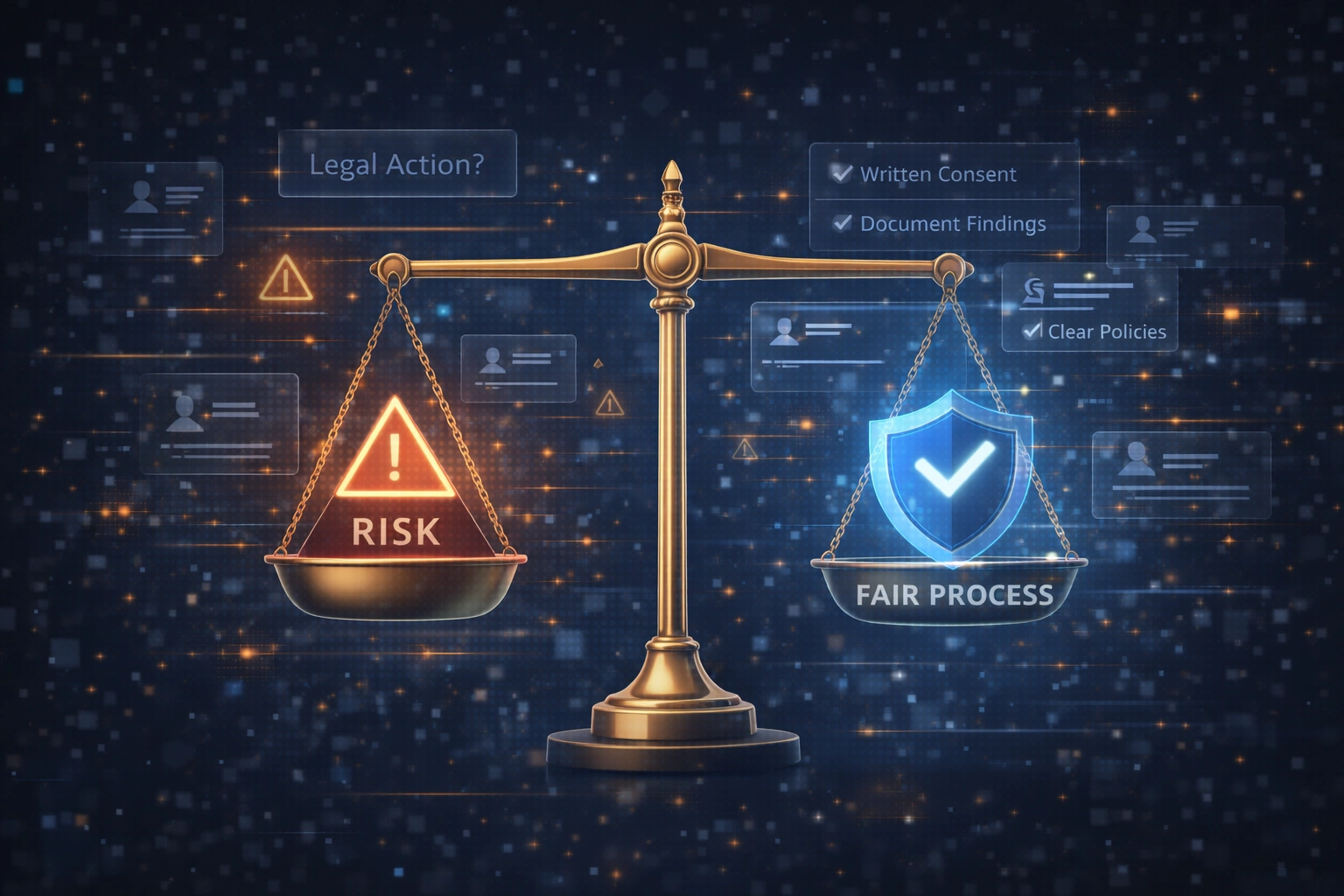
Background verification does not create legal risk — poor process does.
Handled correctly, verification strengthens both hiring quality and legal defensibility
Leave a comments