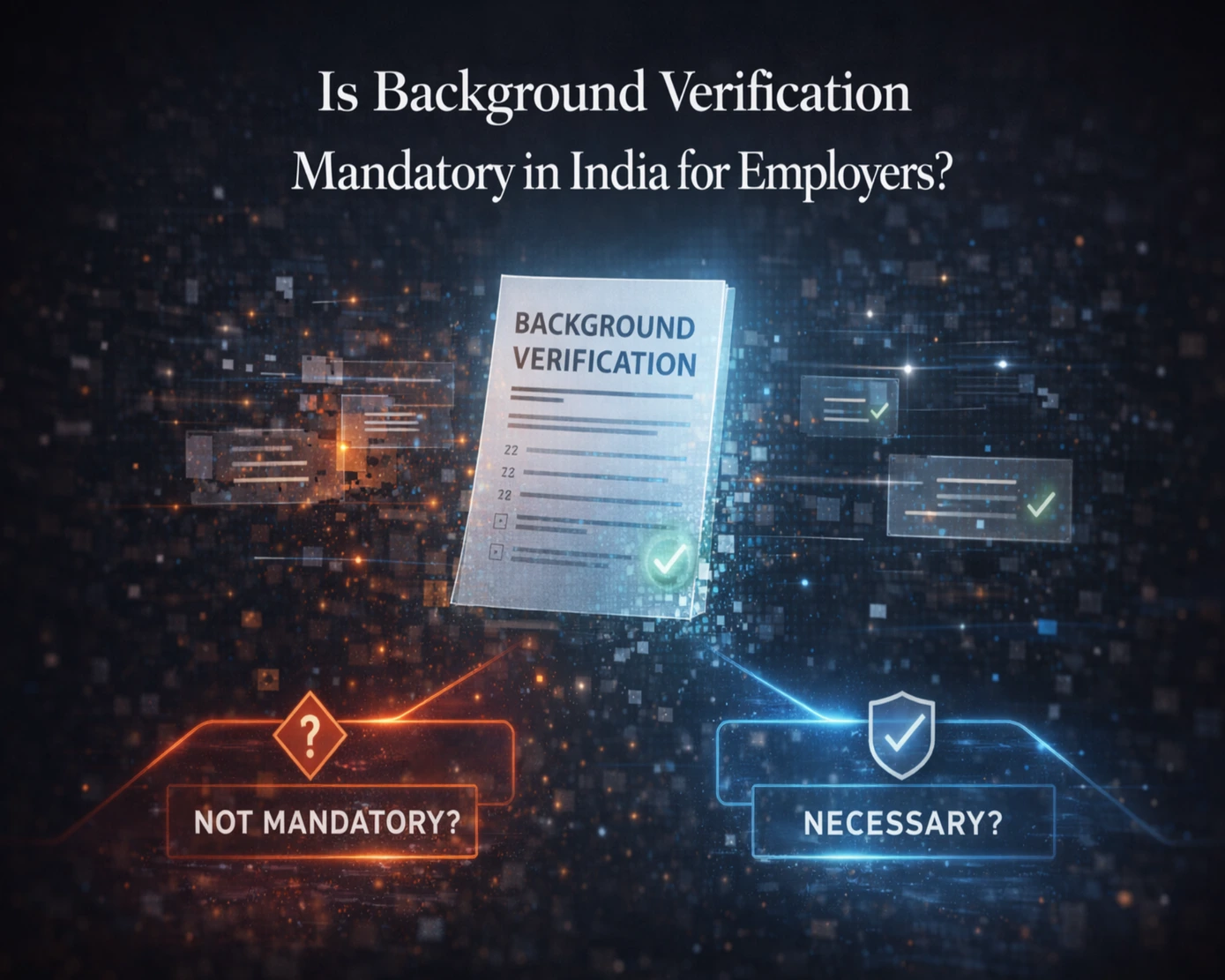
Is Background Verification Mandatory in India for Employers?
Why This Question Comes Up So Often
Many employers in India ask whether background verification is legally mandatory or simply a best practice. This question usually arises when hiring needs to move quickly, budgets are tight, or leadership is unsure about legal obligations.
The confusion exists because there is no single law that explicitly states all employers must conduct background verification. However, this does not mean companies are free from responsibility. In practice, background verification sits at the intersection of legal duty, risk management, and corporate accountability.
What the Law Actually Says
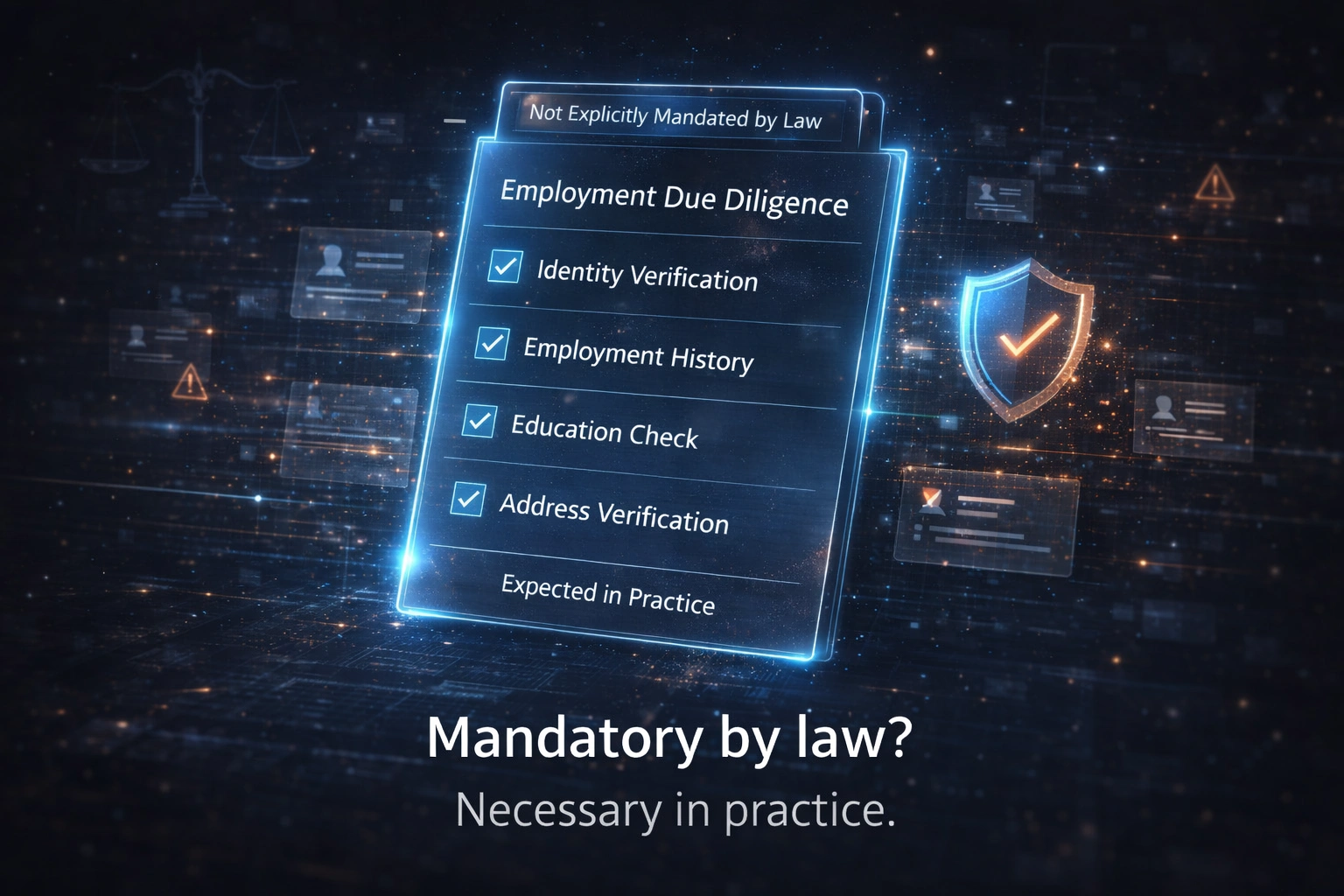
Indian labor laws do not mandate a universal background verification process for every job role. However, multiple regulations, sector-specific guidelines, and judicial expectations collectively place a responsibility on employers to exercise due diligence in hiring.
Courts and regulators often evaluate whether an employer took reasonable steps to verify a candidate’s identity, credentials, and suitability — especially when incidents occur. The absence of a specific mandate does not remove accountability.
Industry and Role-Based Expectations
While background verification may not be legally compulsory across all roles, it becomes effectively mandatory in many industries and positions.
Sectors such as BFSI, IT services, healthcare, education, logistics, and staffing often require verification due to data access, safety, or regulatory exposure. Client contracts and industry standards frequently include background verification clauses, making it a practical requirement even if not explicitly mandated by law.
For roles involving sensitive data, financial authority, or public interaction, verification is widely expected as part of responsible hiring.
Employer Liability and Due Diligence
When employee-related incidents occur — such as fraud, misconduct, data breaches, or safety issues — organizations are often asked a critical question:
Did the employer conduct reasonable due diligence before hiring?
Background verification helps demonstrate that the employer acted responsibly. Without it, organizations may struggle to defend hiring decisions, even if no law explicitly required verification at the time.
Why Many Companies Treat BGV as Mandatory
In reality, most professional organizations treat background verification as mandatory because:
-
Clients expect it
-
Auditors look for it
-
Regulators assess it indirectly
-
Leadership accountability depends on it
What is optional on paper becomes essential in practice when risk, reputation, and compliance are considered.
Risks of Skipping Background Verification
Companies that skip verification expose themselves to multiple risks:
-
Hiring unqualified or misrepresented candidates
-
Increased likelihood of early attrition or termination disputes
-
Weak legal defensibility in case of incidents
-
Loss of client trust and reputational damage
These risks often outweigh the perceived cost or delay associated with verification.
The Smarter Way to Look at Mandatory vs Necessary
Instead of asking whether background verification is mandatory, a better question is:
Is it defensible to skip verification for this role?
For many positions, especially in today’s hiring environment, the answer is no. Verification provides clarity, protects the organization, and supports fair hiring practices.
Final Thought
Background verification may not be explicitly mandatory under a single Indian law, but it is increasingly expected as part of responsible employment practices.
Organizations that treat verification as optional take on avoidable risk. Those that integrate it into hiring governance build trust, compliance readiness, and long-term stability.
The safest approach is not to ask whether you must verify — but whether you can afford not to.
Leave a comments