Background Verification During the Probation Period: What Employers Should Know
Why Background Verification Often Extends Into Probation
In many organizations, hiring timelines move faster than verification cycles. Offers are rolled out, employees join, and background verification continues into the probation period. This is especially common in high-volume hiring, remote roles, and fast-scaling teams.
While this approach is operationally practical, it creates uncertainty for HR and leadership. The assumption that probation offers unlimited flexibility is one of the most common misconceptions in hiring governance.
What the Probation Period Really Means
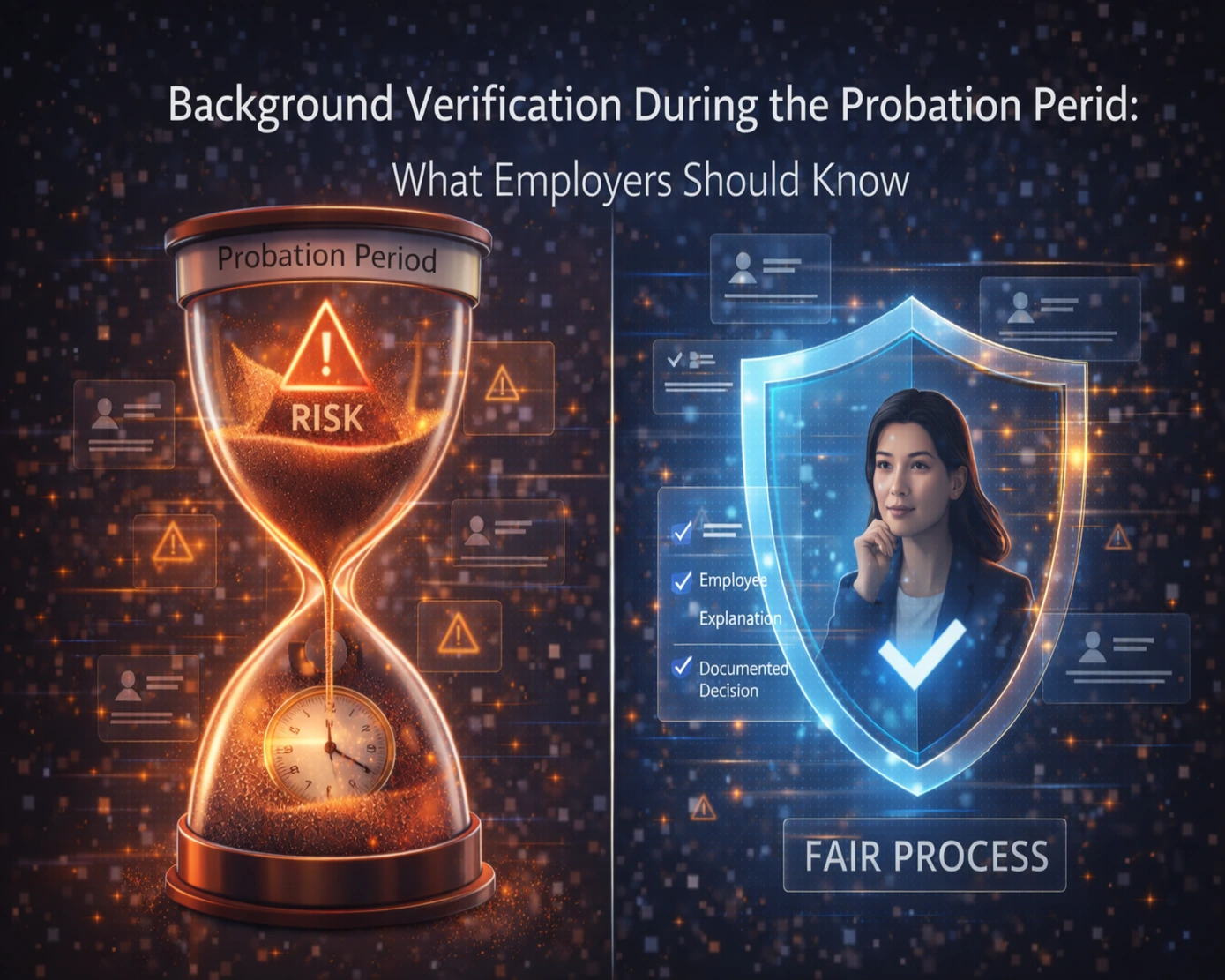
Probation is designed to assess performance, role fit, and behavioral alignment — not to bypass fair process. While employment terms may be more flexible during probation, employers are still expected to act reasonably and consistently.
Background verification findings during probation must be handled with the same professionalism as pre-joining discoveries. Probation does not eliminate responsibility; it simply changes the context.
Can Employers Conduct BGV During Probation?
Yes, employers can conduct background verification during probation provided consent has been obtained and the verification scope was communicated upfront.
Issues arise when verification is introduced silently or expanded without clarity. Transparency at the offer or onboarding stage is critical to avoid disputes later.
What to Do If a Discrepancy Is Found During Probation
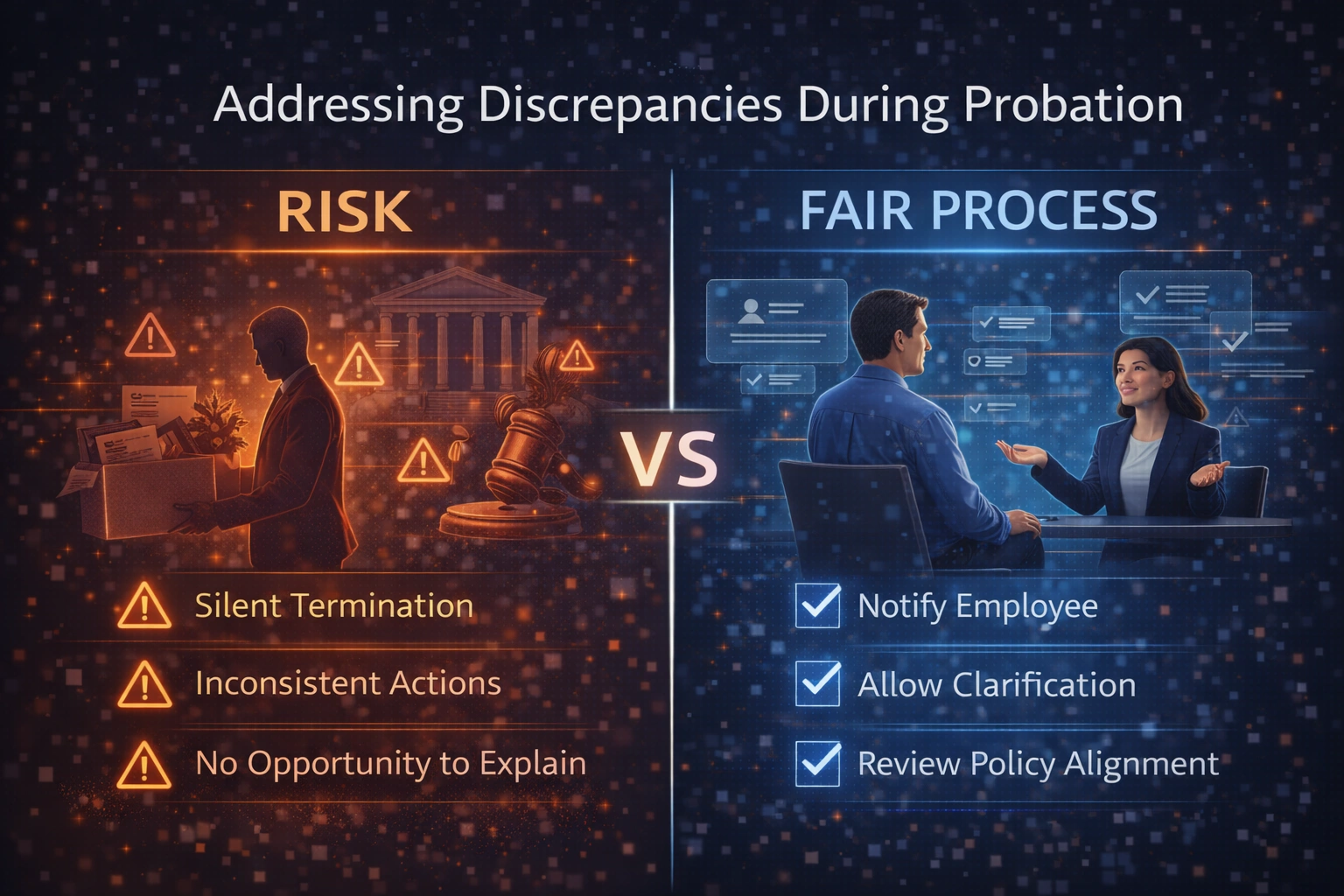
When a discrepancy surfaces during probation, the first step is assessment — not action.
HR should:
-
Review the nature and severity of the finding
-
Check relevance to the role
-
Confirm whether it violates company policy
-
Document the finding clearly
Only after this should communication with the employee begin.
Giving the Employee a Fair Opportunity to Respond
Even during probation, fairness matters. Employees should be informed of the findings and given a chance to explain or submit clarification.
This step protects the organization legally and reinforces a culture of fairness. Skipping this stage increases the risk of disputes and escalations.
Possible Outcomes Employers Can Consider
Depending on the findings, organizations may:
-
Continue employment with documentation
-
Extend probation for further assessment
-
Restrict access or responsibilities
-
Terminate employment with justification
The decision should align with internal policy and be consistent with how similar cases are handled.
Why Documentation Is Critical During Probation
Probation-period terminations often attract scrutiny when challenged. Documentation becomes the strongest defence.
This includes:
-
Verification reports
-
Employee communication records
-
Internal decision notes
-
Policy references
Without documentation, even justified actions can appear arbitrary.
Avoiding the “Probation Equals Free Exit” Trap
Some organizations misuse probation as a safety net to correct hiring mistakes quietly. This approach backfires.
When termination appears sudden, unexplained, or inconsistent, employees are more likely to question decisions — even during probation.
Professional handling preserves employer credibility.
Leadership Alignment Matters
HR teams should not manage probation-related verification issues in isolation. Leadership alignment ensures decisions are supported and not reversed under pressure to retain headcount.
Clear escalation frameworks protect HR from being caught between risk and urgency.
Final Thought
Background verification during probation is valid — but it is not a shortcut around fairness or governance.
Organizations that handle probation-period findings transparently, consistently, and with documentation protect themselves while maintaining trust.
Probation is a review period — not a risk-free zone.
Leave a comments